How Do Scientists Determine Whether Humpback Whale Songs Change With the Seasons?
Humpback whales are known for their complex songs, which consist of repeated sounds organized into recognizable patterns. These songs provide researchers with an opportunity to study animal communication over time. One important question is whether whale songs remain similar throughout a breeding season or change as the season progresses.
Scientists investigate this question by comparing underwater recordings collected at different times of the year. They examine changes in song structure, the occurrence of particular sound patterns, and the consistency of songs across recording periods. They may also investigate whether environmental conditions, whale movements, and changes in the population present in an area help explain the results.
Understanding seasonal song variation is particularly relevant to humpback whale research because these animals undertake long migrations and gather in breeding areas during particular periods. Samaná Bay in the Dominican Republic is associated with seasonal humpback whale activity, but any claims about local song changes must be supported by recordings and research from the region.
What Are Seasonal Changes in Humpback Whale Songs?
Seasonal changes refer to differences in whale singing or song structure observed across longer periods, such as successive months or stages of a breeding season.
These differences can take several forms. Researchers might find that certain song patterns become more common, that the arrangement of recognizable sound units changes, or that the songs recorded later in a season differ from those recorded earlier.
It is important to distinguish between changes in singing activity and changes in the songs themselves.
For example, researchers might detect more song during one part of the season without finding any substantial difference in song structure. Alternatively, the amount of singing might remain similar while the acoustic patterns change.
Scientists therefore define the question they want to answer before analyzing their recordings.
1. Collecting Recordings Across the Season
The first step is to collect underwater audio at multiple points throughout the study period.
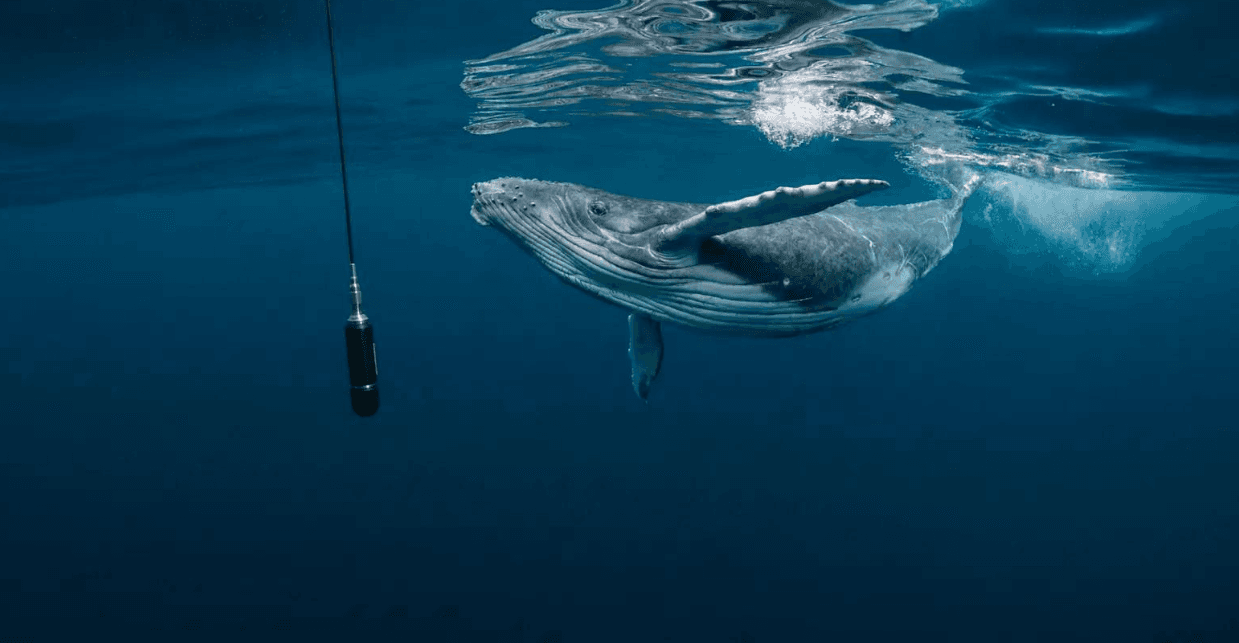
Researchers may deploy hydrophones at fixed locations, use autonomous recording systems, or collect recordings during carefully documented research surveys. Each approach offers different advantages.
Fixed hydrophones can provide repeated observations from the same location. Research surveys can help sample different areas, although the location and conditions of each recording must be documented.
A seasonal sampling plan might include recordings from:
- The beginning of a breeding season.
- An intermediate period.
- The later part of the season.
- Additional dates that help fill gaps or verify an apparent pattern.
The exact schedule depends on the research question, local whale presence, and available resources.
Consistent sampling is important. If researchers collect extensive recordings early in the season but only a few minutes later, differences in the resulting dataset could reflect unequal sampling effort rather than a biological change.
Scientists should record dates, times, recording duration, equipment settings, location, and data quality so that later comparisons can be made fairly.
2. Identifying Song Patterns in Audio Recordings
Once the recordings are collected, scientists identify whale songs using audio playback, spectrograms, and acoustic analysis software.
A spectrogram represents sound energy across time and frequency. It allows researchers to examine recognizable features such as frequency changes, sound duration, and the arrangement of acoustic elements.
Researchers may classify recurring sound units and examine how they are organized into phrases or larger sequences.
By applying consistent criteria to recordings from different periods, scientists can compare the patterns that appear early, midway through, and late in the season.
However, sound identification can be difficult when recordings contain strong background noise or overlapping vocalizations. Automated classification tools can help process large datasets, but researchers should validate their performance and review uncertain results.
The purpose is to make sure that an apparent change in song structure is not simply the result of differences in recording quality or classification accuracy.
3. Comparing Song Structure Across Different Months
One approach to seasonal research is to compare the structure of songs recorded at different points in the season.
Scientists may examine:
- The sequence of identifiable sound units.
- The duration of repeated acoustic elements.
- Changes in frequency characteristics.
- The organization of phrases into larger song sequences.
- The occurrence of particular patterns across recording periods.
Researchers can then determine whether the differences are consistent enough to support a meaningful interpretation.
For example, a hypothetical study might identify a particular phrase pattern in recordings collected early in the season and find a different arrangement in later recordings. The researchers would examine whether the pattern appears consistently across multiple recordings and whether the difference could be explained by the presence of different singers.
A comparison between two recordings alone is not sufficient to establish a seasonal trend. Repeated observations and reliable classification are needed to separate meaningful changes from ordinary variation.
4. Understanding Song Evolution During a Breeding Season
Humpback whale songs can change over time. Researchers studying song evolution may examine how acoustic patterns are modified, retained, or replaced across successive recording periods.
A seasonal study can help identify when particular patterns appear or disappear within the available dataset.
For example, researchers might investigate whether a recognizable sequence persists across several weeks or whether the overall arrangement of a song becomes different later in the season.
However, the term song evolution should be used carefully. Observing different patterns at two points in time does not, by itself, establish how those differences developed or whether individual whales learned them from other singers.
To investigate possible learning or cultural transmission, scientists need additional evidence about the timing and spread of song patterns, as well as the limitations of their sampling.
Seasonal acoustic comparisons can reveal patterns of change, but explaining the mechanism behind those changes requires further analysis.
5. Distinguishing Song Changes From Changes in the Whales Present
One major challenge is determining whether differences between recordings reflect changes in the songs themselves or differences in which whales are being recorded.
A hydrophone may capture songs from different individuals on different dates. Even if the recording equipment remains in the same place, the whales within detection range can change.
Suppose early-season recordings contain one set of song patterns and later recordings contain another. Several explanations are possible:
- Individual singers may have changed their songs.
- Different whales may have entered or left the recording area.
- The relative number of detectable singers may have changed.
- Environmental conditions may have made certain sound patterns easier to detect.
Researchers should avoid assuming that all recordings represent the same individuals.
When possible, they can combine acoustic data with visual observations, photo-identification records, or other suitable evidence of whale presence. These additional sources may help researchers interpret the recordings, although they do not always establish which individual produced each song.
Without reliable individual identification, conclusions should focus on the patterns recorded in the population or study area rather than claiming that a particular whale changed its song.
6. Accounting for Environmental Conditions
Environmental conditions can influence the quality and interpretation of underwater recordings.
Boat noise, weather-related sound, changing water conditions, and equipment performance may affect how clearly researchers can detect whale vocalizations.
Seasonal changes in the recording environment can create a particular challenge. If background noise differs between the beginning and end of a study, the apparent frequency of some sounds may change even if the underlying whale behavior does not.
Scientists can reduce this problem by documenting environmental conditions and using consistent equipment and analysis procedures.
They may also measure background noise, exclude recordings that fail predefined quality standards, or include relevant environmental variables in statistical models.
These steps help researchers distinguish a genuine change in recorded song patterns from a change in how the sounds were captured.
7. Measuring Seasonal Singing Activity Separately From Song Structure
Not all seasonal whale song research focuses on how songs are organized. Some studies investigate how the amount of detected singing changes across a study period.
Researchers might calculate the proportion of usable recording time containing song or measure the rate of clearly defined song events.
These measurements can reveal differences in detected vocal activity across dates. However, researchers should not treat them as direct counts of individual whales.
A higher rate of detected singing could reflect more singing by nearby whales, more singers within detection range, clearer recording conditions, or some combination of factors.
To investigate song structure, researchers instead compare identifiable acoustic patterns and their organization.
Keeping these outcomes separate prevents a common misunderstanding: more detected whale song does not necessarily mean the songs themselves have changed.
8. Using Statistical Methods to Evaluate Seasonal Trends
Researchers can use statistical analysis to determine whether observed differences are consistent across the sampling period.
Depending on the dataset, they might compare the frequency of particular song patterns, model the occurrence of song over time, or investigate changes in acoustic measurements.
A suitable analysis should account for the amount of usable recording data, repeated observations, relevant environmental conditions, and uncertainty in sound classification.
Researchers should also consider the possibility that nearby recording intervals are related rather than independent. Treating every interval as a separate independent observation can make the evidence appear stronger than it is.
The study design should determine the statistical method, rather than selecting a method simply because it produces a striking result.
A useful conclusion describes the direction and magnitude of the observed difference, how consistently it appeared, and what limitations remain.
9. What Could Seasonal Song Research Reveal About Samaná Bay?
Samaná Bay is known as a seasonal destination for humpback whale watching. Acoustic research could provide an additional way to investigate the whales' presence and vocal behavior beyond what surface observations alone can reveal.
A local study could collect recordings throughout the relevant season and compare song structure, detected singing activity, and environmental conditions across successive periods.
Researchers could investigate whether particular song patterns remain recognizable over time, whether differences occur between recording periods, and whether the patterns vary with the composition of the whales present.
However, these are potential research questions, not established findings about seasonal song changes in Samaná Bay. Such conclusions require suitable local acoustic data and careful analysis.
Observations from other breeding grounds can inform research methods and help generate hypotheses, but they should not be presented as proof of what happens in Samaná.
For visitors, seasonal acoustic research also has limits. It cannot independently guarantee the best day or time for surface sightings, because underwater singing and visible whale activity are different measures.
10. How Long-Term Monitoring Improves Seasonal Research
Long-term acoustic monitoring allows scientists to compare observations across multiple seasons rather than relying on one short sampling period.
Repeated studies can help researchers assess whether a pattern appears again in subsequent years or whether the observed change was specific to one season.
They can also investigate whether recording conditions, sampling locations, or changes in the whales present might explain differences between years.
To make these comparisons reliable, researchers should maintain consistent procedures or document changes in equipment and methodology. Otherwise, an apparent long-term trend might partly reflect a change in how the data were collected.
Long-term monitoring can strengthen the evidence for recurring patterns, but it still requires careful interpretation and transparent reporting.
11. Common Mistakes When Studying Seasonal Whale Songs
Several mistakes can weaken seasonal acoustic research.
Comparing unequal amounts of audio: Longer recording periods provide more opportunities to detect songs. Researchers should standardize sampling or account for differences in recording effort.
Assuming different recordings represent the same whale: Individual identity cannot be inferred from song similarity alone.
Confusing singing activity with song evolution: A change in how often songs are detected is different from a change in song structure.
Ignoring recording quality: Noise and equipment differences can make some acoustic patterns harder to identify.
Drawing conclusions from too few dates: A small sample may fail to represent the broader seasonal pattern.
Assuming that a pattern observed elsewhere also occurs in Samaná: Local claims need local evidence.
Claiming a cause without sufficient evidence: Detecting a seasonal difference does not automatically explain why it occurred.
Recognizing these limitations helps researchers produce more accurate findings and communicate them responsibly.
Conclusion
Scientists investigate seasonal changes in humpback whale songs by collecting underwater recordings over time, identifying recognizable acoustic patterns, comparing song structure across periods, and evaluating the results using appropriate statistical methods.
Reliable research must distinguish changes in song structure from changes in detected singing activity. It must also consider recording quality, environmental conditions, the whales present, and the limitations of individual identification.
For Samaná Bay, these methods offer a framework for investigating how humpback whale vocal patterns may vary throughout the season. Specific local conclusions require supporting recordings and validated analysis.
By studying whale songs across longer periods, researchers can better describe acoustic variation and investigate how vocal patterns develop over time without making claims that go beyond the available evidence.
Frequently Asked Questions
Do humpback whale songs change during the breeding season?
Humpback whale songs can change over time, but the timing and nature of any changes must be established through appropriate recordings and analysis. Researchers should not assume that every population follows the same seasonal pattern.
How do scientists compare whale songs from different months?
They use underwater recordings, spectrograms, consistent sound-classification criteria, and measurements of acoustic patterns. They then compare results across recording periods while accounting for sampling effort and recording conditions.
Are seasonal changes in song the same as changes in singing activity?
No. Singing activity concerns how often or how long song is detected. Song-structure research examines the organization and characteristics of the sounds themselves.
Can scientists tell whether the same whale changed its song?
Sometimes additional evidence can help identify individual whales, but recordings alone do not always establish who produced a particular song. Researchers must distinguish population-level patterns from confirmed individual changes.
Are seasonal changes in humpback whale songs documented specifically in Samaná Bay?
Specific conclusions require suitable local studies and acoustic recordings. Findings from other breeding areas may inform research questions but do not establish a seasonal song pattern in Samaná Bay.
Can seasonal whale song research predict whale-watching success?
Not on its own. Underwater acoustic activity does not directly predict when whales will be visible at the surface. Responsible whale-watching guidance should rely on appropriate local evidence and established observation practices.

Local explorer & expert guide in Salto El Zumbador.