How Do Humpback Whales Protect Their Skin in the Ocean?
Humpback whales spend their lives in an environment that presents very different challenges from those faced by land mammals. Their skin is constantly exposed to seawater, changing temperatures, sunlight near the surface, and contact with the surrounding marine environment.
Despite these conditions, humpback whales are well adapted to life in the ocean. Their skin forms an important protective barrier, helps maintain the body's condition, and provides clues that researchers can use when studying individual animals.
For visitors watching humpback whales in Samaná Bay in the Dominican Republic, skin is not usually the first feature that attracts attention. Yet the patterns, markings, scars, and surface texture visible on a whale can reveal fascinating details about its biology.
So, how do humpback whales protect their skin, and what helps them maintain it in a demanding marine environment?
What Makes Humpback Whale Skin Different From Human Skin?
Humpback whales are mammals, just like humans, so their skin shares the same basic structure. However, their bodies have evolved to function in water rather than on land.
Whale skin includes an outer epidermis and deeper layers that provide structural support and connect with underlying tissues. The outer layer helps protect the animal from its surroundings, while deeper tissues contribute to strength, flexibility, and the body's overall function.
A whale's skin is adapted to its aquatic lifestyle. It must withstand repeated contact with seawater while allowing the animal to move efficiently through the ocean.
Unlike many land mammals, humpback whales do not rely on a thick coat of fur to protect their bodies. Their smooth outer surface and specialized body tissues are part of a broader set of adaptations for swimming and maintaining body condition.
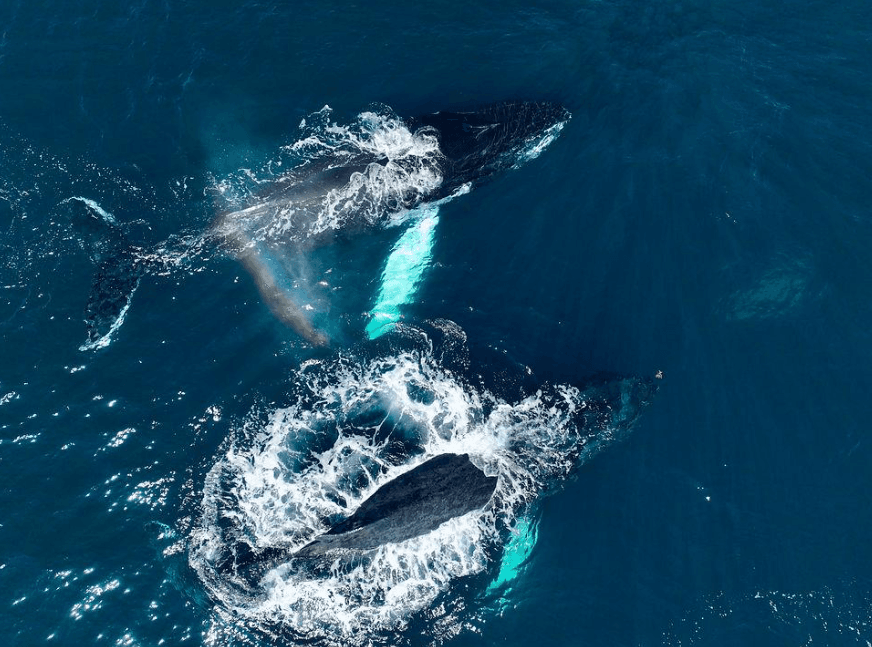
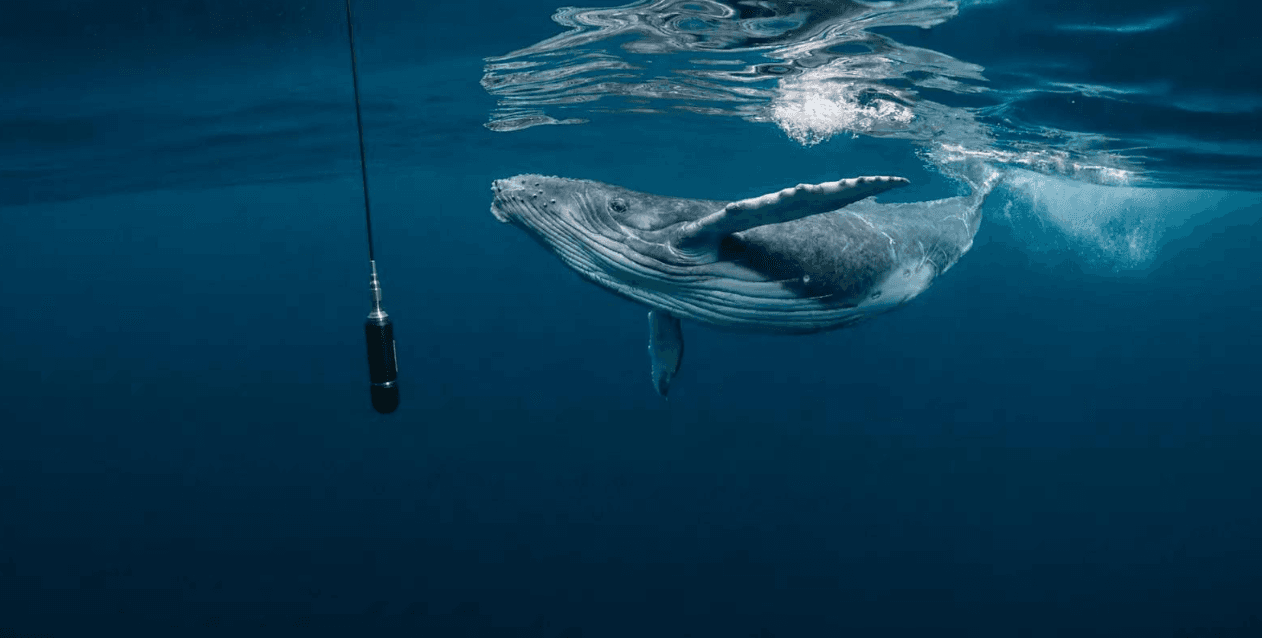
The appearance of whale skin can vary across the body. Humpback whales commonly display contrasting black, white, and gray areas, especially around the underside and pectoral fins. These patterns are natural features, not signs that the skin is damaged.
How Does Whale Skin Provide Protection?
Skin serves as a physical barrier between a whale's internal tissues and the outside environment.
The outer epidermis consists of cells that are continually renewed. As older cells reach the surface, they can be shed and replaced by new cells. This renewal helps maintain the skin's protective function.
The skin also works alongside other biological systems that help a whale maintain its health. It does not act as an isolated shield; the condition of the animal depends on nutrition, immune function, environmental conditions, and its overall physiology.
A healthy outer skin layer helps limit direct exposure of underlying tissues to the marine environment. However, it is not completely immune to injury. Whales can develop scars, abrasions, and other visible marks.
These marks may remain noticeable long after an injury has occurred, making skin an important feature for researchers studying whale identification and life history.
Do Humpback Whales Shed Their Skin?
Yes. Humpback whales, like other mammals, continually replace skin cells. Older cells are shed as new cells develop.
In some cetaceans, skin shedding can be particularly noticeable during certain periods or under particular conditions. Researchers have documented skin renewal in whales and other cetaceans, although the amount and visibility of shedding can vary.
This process should not be confused with reptiles shedding their skin in one large piece. Whale skin renewal generally occurs through the replacement of cells rather than the animal removing its entire outer covering at once.
Skin renewal helps maintain the outer barrier, but it does not mean that every visible patch, mark, or color variation is related to shedding.
For whale watchers, this is another reminder that a whale's appearance reflects many biological processes that may not be obvious from a brief surface sighting.
How Does Seawater Affect Humpback Whale Skin?
Ocean water contains dissolved salts and other substances, and marine animals must maintain the right balance of water and salts inside their bodies.
Humpback whales have physiological systems that help regulate this balance. Their skin forms part of the body's outer boundary, but salt regulation is not performed by the skin alone. The kidneys and other internal processes also play essential roles.
Whales are therefore not simply relying on a waterproof surface to survive in seawater. Their bodies combine protective tissues with specialized internal regulation.
Ocean conditions can also vary. Water temperature, pollutants, physical contact, and biological organisms can influence the environment in which a whale lives. The effects depend on the type and intensity of exposure.
Understanding these factors helps explain why maintaining healthy skin is important to a whale's overall condition, even though the exact cause of a particular skin mark may be difficult to identify.
What Causes Scars and Marks on Humpback Whale Skin?
Humpback whales often have visible marks on their bodies. These can include scars, pale patches, scratches, and areas of contrasting pigmentation.
Some marks may result from contact with other whales, interactions with the environment, or encounters with fishing gear and vessels. Other markings may be associated with natural skin pigmentation or organisms that live on the whale's body.
Not every mark represents a current injury. A scar may remain visible after the original wound has healed, while a naturally pale patch may simply be part of the whale's normal appearance.
Researchers can sometimes use stable markings to distinguish individual humpback whales, particularly when examining photographs of the underside of the tail flukes. Other visible characteristics can also help with identification.
For visitors, the important point is to avoid diagnosing a whale's health based only on a photograph. Identifying the cause of a mark often requires more information than is available during a boat trip.
Do Parasites and Other Organisms Affect Whale Skin?
Various organisms can live on or interact with the bodies of whales. Humpback whales may carry whale lice, which are small crustaceans, as well as barnacles in certain areas.
These organisms are part of the marine environment and are not automatically evidence of poor health. Their abundance and distribution can vary between individual whales and across different parts of the body.
Some barnacles attach firmly to the skin, while whale lice can occupy protected areas such as folds, scars, or around the head and fins. These associations are examples of the complex relationships that exist between marine mammals and other organisms.
However, not every visible bump or pale area is a parasite. Humpback whales have natural anatomical features and pigmentation patterns that can look unusual to people seeing them for the first time.
Responsible observation means appreciating these details without assuming that the animal is sick or injured.
Can Warm Water or Sunlight Damage Whale Skin?
Humpback whales spend time at different depths and may be exposed to sunlight when they surface. Their skin must function under these changing conditions.
Research on cetaceans has examined how sunlight exposure and environmental conditions may affect skin. The effects can depend on pigmentation, exposure duration, water conditions, and the individual animal.
Water also influences heat exchange between a whale's body and the environment. Humpback whales have thick blubber beneath their skin, which provides insulation and energy storage. This underlying tissue plays a different role from the outer skin itself.
It would be misleading to suggest that whale skin is completely protected from environmental damage. Marine mammals can experience skin lesions and other changes, and researchers investigate how natural and human-related factors may contribute to them.
The condition of whale skin is therefore relevant to broader studies of marine wildlife health and environmental quality.
Why Is Whale Skin Important to Marine Scientists?
Skin can provide researchers with useful information about individual whales and their environments.
Photographs may help identify animals by their markings, scars, and pigmentation. When researchers repeatedly observe the same individual, they can compare its appearance over time and document changes.
In some research programs, scientists also study skin samples to investigate genetics, physiology, contaminants, or other biological questions. Such work must use appropriate methods and follow relevant research and animal-welfare requirements.
Observing skin condition can also contribute to assessments of marine mammal health. However, photographs alone usually cannot establish a specific diagnosis or explain every mark.
For these reasons, whale skin is more than a protective covering. It can also provide valuable evidence for scientific research and long-term monitoring.
What Can Whale Watchers Learn From Skin Patterns in Samaná Bay?
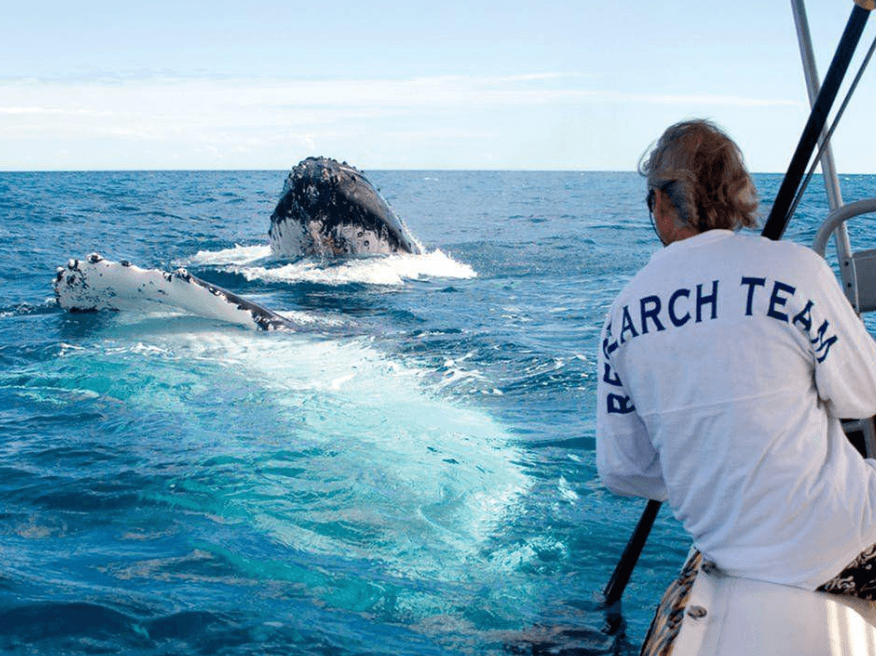
During a Samaná whale-watching trip, visitors may notice contrasting colors, scars, or pale markings on a humpback whale. These details can make each animal appear distinctive.
The best viewing opportunities depend on the whale's position, distance, sea conditions, and the angle from which it is observed. Many skin details are difficult to see when the animal remains far from the boat.
Guides may explain the visible features of humpback whales and how researchers use markings for identification. It is useful to distinguish between what can be seen directly and what would require additional scientific information.
For example, a scar may be visible, but its precise cause may be unknown. A pale area may be natural pigmentation rather than a sign of disease.
The experience becomes more informative when visitors learn to observe these details carefully instead of assuming that every marking tells a complete story.
How Can Responsible Whale Watching Help Protect Marine Mammals?
Whale watching provides an opportunity to appreciate marine wildlife, but it should be conducted in a way that minimizes disturbance.
Choose operators that follow applicable whale-watching regulations, respect approach distances, and prioritize passenger safety. Avoid encouraging boats to pursue whales or change course aggressively to obtain closer photographs.
Marine mammals face various pressures in the ocean, including entanglement in fishing gear, vessel strikes, pollution, and changes to their habitats. Responsible wildlife tourism cannot solve every threat, but it can support a culture of respect for animals and their environment.
Visitors can also help by avoiding litter, following crew instructions, and sharing accurate information about whale behavior rather than spreading unsupported claims.
A thoughtful whale-watching experience combines enjoyment with an understanding that these animals are wild and should be allowed to behave naturally.
Plan Your Samaná Whale-Watching Experience
Humpback whale skin is a remarkable adaptation that protects the body, renews itself over time, and provides visible details that can help researchers study individual animals. Scars, pigmentation, and naturally occurring organisms all contribute to the appearance of a whale, but these features should not be interpreted without context.
During the seasonal whale-watching period, Samaná offers visitors an opportunity to observe humpback whales in their natural marine environment. You may notice distinctive markings or skin details, although visibility and wildlife behavior vary from trip to trip.
If you are planning a visit, explore available Samaná whale-watching excursions and confirm current departure times, meeting arrangements, tour duration, and safety practices directly with the operator.
Ready to discover humpback whales in Samaná Bay? Plan your visit during the seasonal migration and choose a responsible excursion to learn more about these extraordinary marine mammals.
Frequently Asked Questions
Do humpback whales have skin like humans?
Yes. Both are mammals with an epidermis and deeper skin layers. However, whale skin has adaptations suited to an aquatic lifestyle.
Do humpback whales shed their skin?
Yes. Their skin cells are continually renewed, and older cells are shed. This is generally a gradual process rather than the removal of the entire outer skin at once.
What causes scars on humpback whales?
Scars may result from various interactions or injuries, including contact with other animals, fishing gear, or the environment. A visible scar does not always reveal its original cause.
Do barnacles mean a humpback whale is unhealthy?
Not necessarily. Barnacles and other organisms can naturally occur on whales. Their presence alone is not enough to determine an animal's overall health.
Can whale skin reveal information about marine pollution?
Skin and skin samples can contribute to scientific research into whale health and environmental exposure. However, a visible skin mark alone cannot establish that pollution caused it.
Can visitors see whale skin markings in Samaná Bay?
Sometimes. Visibility depends on the whale's distance, position, lighting, and sea conditions. Some markings may be difficult to distinguish from a boat.
Editorial note: This article describes general cetacean skin biology and does not claim that a particular skin mark proves injury, disease, or pollution exposure.

Local explorer & expert guide in Salto El Zumbador.