How Do Scientists Measure the Duration of a Complete Humpback Whale Song Cycle?
Humpback whales produce elaborate songs made up of acoustic units, phrases, and longer sequences. These sounds often follow recognizable patterns, allowing researchers to investigate how a song is organized and how long particular sequences take to unfold.
One useful measurement is song-cycle duration. It describes the time required for a defined sequence to occur, from a chosen starting point to the corresponding endpoint. Measuring this duration can help scientists compare song organization across recordings and investigate how vocal patterns vary over time.
However, measuring a complete humpback whale song cycle is not as simple as starting a stopwatch when a whale begins singing. Researchers must define the cycle, identify its boundaries, account for pauses, and determine whether the recording captures the entire sequence.
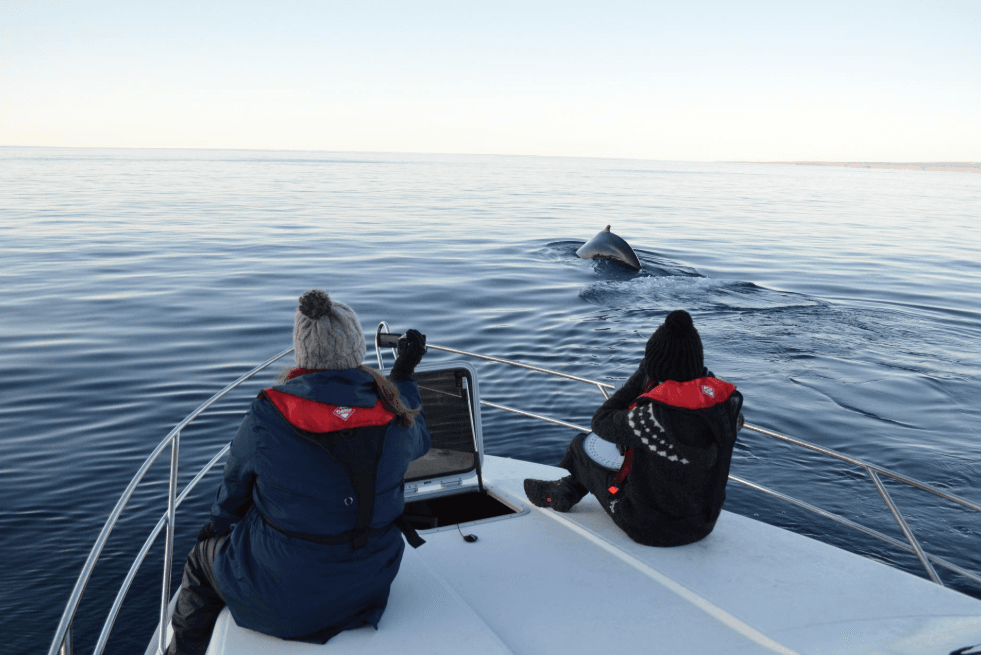
For people interested in Samaná whale watching in the Dominican Republic, this research provides another perspective on the underwater behavior of humpback whales.
What Is a Humpback Whale Song Cycle?
Humpback whale songs contain recurring acoustic units arranged into phrases and larger sequences. In some analyses, researchers identify a song cycle as a recurring sequence that can be compared with subsequent repetitions.
The exact definition depends on the research question. A study might focus on a recurring phrase, a recognizable sequence of phrases, or a larger repeated section of song.
These levels should not be confused. The duration of one phrase may be much shorter than the duration of a complete sequence containing several phrases.
Scientists therefore establish a consistent operational definition before measuring cycle duration. This allows them to compare like with like and avoid treating different parts of a song as equivalent.
A cycle boundary is an analytical decision supported by the acoustic pattern; it is not necessarily a clearly audible pause or an obvious break in the whale's singing.
1. Recording Long Enough to Capture a Complete Cycle
The first requirement is an acoustic recording that contains enough of the song to identify the beginning and end of a cycle.
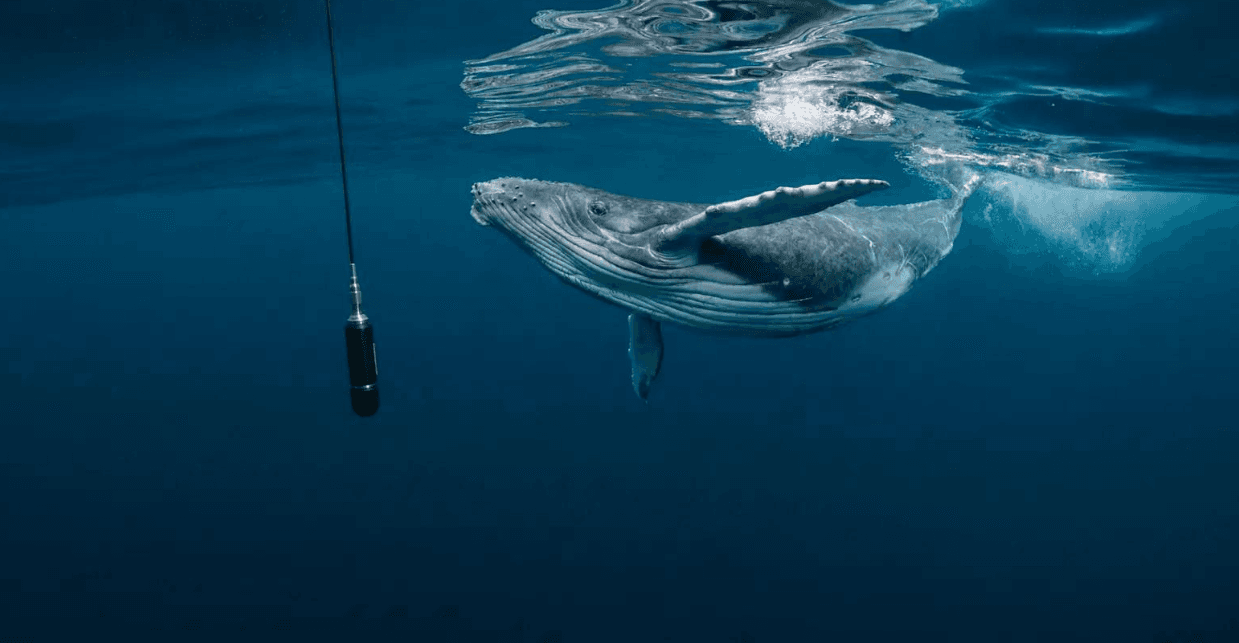
Researchers use hydrophones, or underwater microphones, to record whale vocalizations. Depending on the study, recording equipment may be deployed from a research vessel, installed at a fixed location, or used in another suitable arrangement.
Longer recordings can reveal repeated sequences that would be impossible to identify from a brief sample. They also allow researchers to determine whether an apparent cycle boundary is followed by a similar sequence.
However, a recording may begin after singing has already started or end before the whale finishes. In these cases, the observed sequence may be incomplete.
Scientists should distinguish the duration of the recorded segment from the duration of a complete song cycle. If the boundaries cannot be established confidently, the cycle may need to be excluded from duration calculations or reported as uncertain.
2. Defining the Start and End of a Cycle
Accurate measurement depends on consistent boundary rules.
Researchers may identify a recognizable phrase or sequence that marks the beginning of a cycle. They then follow the recording until the corresponding endpoint is reached, using the song's structure to determine whether the sequence has completed.
For example, suppose a defined sequence begins at 12 seconds and reaches its corresponding endpoint at 47 seconds. Its measured duration is 35 seconds.
This is a hypothetical example, not a measured duration for humpback whale songs in Samaná Bay.
The endpoint should be defined consistently. If one researcher measures from the beginning of the first vocal unit while another measures from the start of the second phrase, their results will not be directly comparable.
When a sequence lacks an obvious boundary, researchers may need to examine repeated patterns, consult established classification criteria, and document the uncertainty.
3. Using Spectrograms to Identify Song Structure
A spectrogram displays how sound frequency changes over time. It helps scientists visualize individual vocal units and examine how they are arranged within a longer sequence.
The horizontal axis generally represents time, while the vertical axis represents frequency. Differences in visual intensity indicate the strength of recorded sound at particular frequencies.
Researchers can use spectrograms to locate recurring phrases, compare their acoustic shapes, and identify possible cycle boundaries.
They may also listen to the original recording while inspecting the display. This is important because visual similarity alone may not be sufficient to classify a sound or determine whether two sequences are equivalent.
Spectrograms help make the analysis more systematic, but they do not automatically establish the meaning of a song or guarantee that every boundary has been identified correctly.
4. Calculating the Duration of a Song Cycle
Once the start and end points have been identified, the calculation is straightforward:
Cycle duration = end time − start time
If a sequence begins at 24 seconds and ends at 66 seconds, its duration is 42 seconds.
Researchers can repeat this process for multiple cycles and then summarize the results using an appropriate measure, such as the mean or median duration.
The mean is useful for describing the arithmetic average, while the median can be less affected by unusually long or short observations.
Scientists should also report how many complete cycles were measured and whether some observations were excluded because their boundaries were uncertain.
A calculated average is only as reliable as the definitions and recordings on which it is based.
5. Accounting for Pauses Within a Cycle
A song sequence may include pauses between vocal units or phrases. Whether those pauses count toward cycle duration depends on the research question.
If researchers measure the total elapsed time from the beginning to the end of a complete sequence, pauses within those boundaries are included.
If they measure only the time during which detectable vocal sounds occur, the result represents a different quantity: active vocalization time rather than total cycle duration.
These measurements should not be confused.
For example, a hypothetical sequence might span 40 seconds from start to finish but contain only 30 seconds of detectable vocal sound. Its total elapsed duration would be 40 seconds, while its measured active-sound duration would be 30 seconds.
Both figures could be informative, but each answers a different question.
Researchers should state clearly which measurement they use and how they treat pauses, silence, and intervals when sounds cannot be detected.
6. Distinguishing a Complete Cycle From an Incomplete Sequence
One of the biggest challenges is determining whether a sequence is genuinely complete.
A recording may capture several recognizable phrases without recording the full sequence. Alternatively, background noise may obscure the section needed to establish the endpoint.
Scientists can investigate completeness by examining the surrounding acoustic context and comparing the sequence with other clearly recorded examples.
If the pattern repeats, a subsequent occurrence may help establish where one cycle ends and another begins. However, researchers should not assume that every sequence follows an identical structure.
When the evidence is insufficient, the safest approach is to mark the boundary as uncertain rather than forcing a precise duration.
Excluding incomplete cycles from some calculations may improve consistency, but researchers should describe their selection criteria so readers understand which observations were included.
7. Comparing Successive Song Cycles
After measuring several cycles, researchers can investigate whether their durations remain similar or vary over time.
They might compare the first few complete cycles in a recording with later cycles, or examine whether the same defined sequence has comparable durations across multiple recording sessions.
The comparison is meaningful only if researchers use the same definition of a cycle and the same timing rules throughout the analysis.
If the structure of the song changes, the original cycle definition may no longer fit later sequences. Scientists need to recognize this possibility instead of assuming that every part of the recording can be divided into identical units.
Differences in cycle duration can be described from the data, but explaining why those differences occur requires additional evidence.
8. Measuring Variation Across Different Recordings
Researchers may also compare cycle duration across recordings made on different days or under different conditions.
For example, they could investigate whether a recognizable sequence has similar durations across several recording sessions. They might also compare recordings from different locations if the samples are sufficiently comparable.
Such comparisons require attention to recording quality, singer identity, environmental noise, and the possibility that the song structure changed between observations.
If the identity of the singer is unknown, scientists should avoid claiming that differences represent changes within one particular whale.
Likewise, a difference between two recordings does not automatically demonstrate a population-wide pattern. Researchers need enough suitable observations to determine how representative the result may be.
9. Using Software to Measure Longer Sequences
Acoustic software helps researchers navigate long recordings, display waveforms, inspect spectrograms, and mark the start and end of selected sequences.
Some tools can support the detection of recurring patterns or help organize measurements across many files. Automated methods may be especially useful when researchers are working with extensive acoustic datasets.
However, software can misidentify boundaries when sounds overlap, background noise masks a phrase, or the song structure changes.
Automated outputs should therefore be checked against the original recordings using clear criteria. Researchers also need to document any filtering, segmentation, or processing steps that could affect the measured duration.
The aim is not simply to produce a number quickly, but to obtain a measurement that can be interpreted and reproduced.
10. Understanding Sources of Measurement Error
Several factors can affect estimates of song-cycle duration.
Unclear boundaries: A sequence may not have an obvious beginning or end.
Background noise: Environmental sounds may hide vocal units needed to identify a boundary.
Overlapping singers: Sounds from different whales may be mistakenly combined into one sequence.
Recording gaps: Missing sections can make a complete cycle appear shorter or longer than it really was.
Changing song structure: Later sequences may not follow the same pattern as earlier ones.
Different analytical rules: Inconsistent definitions can produce incompatible measurements even when researchers examine similar recordings.
Scientists can reduce these problems by using standardized criteria, retaining original recordings, checking uncertain observations, and reporting limitations transparently.
A precise-looking duration should never imply more certainty than the underlying acoustic evidence supports.
11. What Song-Cycle Duration Can Tell Scientists
Cycle duration describes one aspect of vocal organization. It can help researchers compare the timing and structure of repeated sequences, investigate consistency within recordings, and identify patterns that deserve further study.
However, duration alone does not reveal why a whale sings a particular sequence or what the song communicates.
Researchers need additional evidence to investigate the relationship between song timing and social behavior, environmental conditions, or other aspects of whale biology.
A longer cycle, for instance, should not automatically be interpreted as a sign of stress, excitement, or a specific communicative intention.
Scientific interpretation is strongest when a measured acoustic feature is combined with suitable behavioral observations and a clearly defined research question.
12. Studying Song Cycles in Samaná Bay
Samaná Bay is a well-known seasonal destination for humpback whale watching. Researchers studying local whale vocalizations could use hydrophones to collect recordings and investigate the duration of clearly defined song sequences.
A suitable study would establish consistent cycle definitions, document recording times and conditions, identify complete sequences, and measure their start and end points.
Researchers would also need to assess whether the recordings capture one singer or multiple overlapping singers and whether any gaps prevent reliable boundary identification.
Comparisons across sessions could help establish how much cycle duration varies within the collected data.
Any conclusions about song-cycle duration in Samaná Bay must be supported by verified local recordings and documented methods. Without those data, it would be inappropriate to present hypothetical measurements as established local findings.
For visitors, this research highlights how underwater acoustic monitoring can reveal aspects of humpback whale behavior that cannot be fully understood from surface observations alone.
Conclusion
Scientists measure the duration of a complete humpback whale song cycle by defining a recognizable sequence, identifying its beginning and end, and calculating the elapsed time between those boundaries.
Spectrograms, acoustic recordings, and specialized software help researchers identify song structure and compare successive cycles. Careful treatment of pauses, incomplete recordings, overlapping singers, and uncertain boundaries is essential for reliable results.
Cycle duration provides a useful measurement of vocal organization, but it cannot independently explain the meaning or purpose of a whale's song.
For anyone interested in Samaná whale watching, studying song cycles offers another way to appreciate humpback whale communication and demonstrates why long-term, carefully analyzed acoustic recordings are valuable to marine science.

Local explorer & expert guide in Salto El Zumbador.