How Do Scientists Investigate Whether Humpback Whales Share Songs Between Different Breeding Grounds?
Humpback whales are known for their complex songs, which can change over time and contain patterns shared among singers. These vocal displays have attracted scientific interest because similarities between whale songs may reveal clues about communication, social learning, and connections between whale groups.
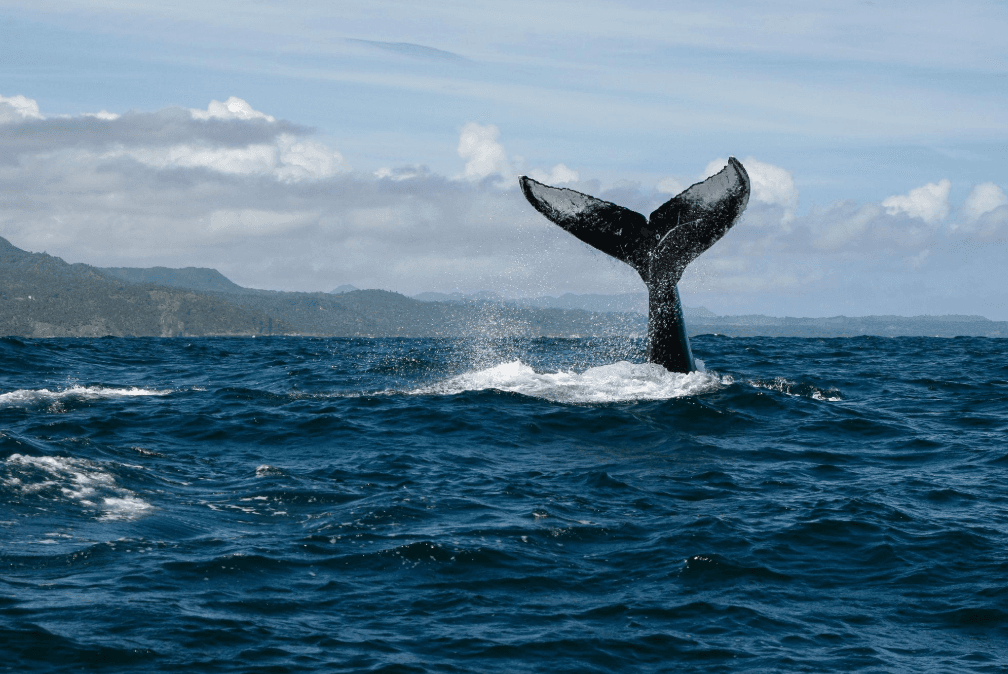
Samaná Bay in the Dominican Republic is an important seasonal destination for humpback whale watching. Researchers studying whales in this region can use acoustic monitoring to investigate local song patterns and, when suitable recordings from other areas are available, explore how those patterns compare with songs recorded at other breeding grounds.
But finding similar songs in two locations does not automatically prove that whales exchanged them. Scientists must examine the timing of the similarities, the structure of the songs, the movement of whales, and other possible explanations.
This article explains how researchers investigate humpback whale song sharing, what evidence can support cultural transmission, and why geographic connections require careful scientific interpretation.
What Is Humpback Whale Song Sharing?
Humpback whale song sharing refers to similarities in vocal patterns produced by whales in different groups or locations. In some documented populations, song patterns have changed over time in ways consistent with cultural transmission.
Cultural transmission occurs when behavior or information spreads through social learning rather than being explained entirely by genetic inheritance. In the context of whale songs, researchers investigate whether whales acquire or adopt song patterns that other whales produce.
Song sharing can involve similarities in individual sound units, repeated phrases, or larger song sequences. Researchers may also investigate whether a pattern first documented in one location appears later in another.
However, song similarity alone cannot reveal precisely how a pattern spread. Scientists need evidence about when and where the pattern occurred, how closely the recordings match, and whether plausible connections exist between the whale groups.
1. Recording Songs at Different Breeding Grounds
The first step is to collect acoustic recordings from the locations being compared.
Researchers may use stationary hydrophones, recording equipment deployed from vessels, or other underwater acoustic systems. The recording method depends on the location, research objectives, and available resources.
A study examining possible song sharing could compare recordings from Samaná Bay with suitable recordings from other breeding grounds. The datasets should include reliable information about recording dates, locations, equipment, and the amount of usable audio.
Longer monitoring periods are particularly useful because they help researchers determine when a song pattern first appears in the available recordings and whether it persists.
A short recording may capture only a small portion of a song, making comparisons difficult. Repeated recordings across the season can provide a more complete picture of the vocal patterns present at each site.
Researchers must also remember that an acoustic recording represents the sounds detected at a particular place and time, not every whale in the surrounding region.
2. Identifying Shared Song Units
Humpback whale songs contain repeated acoustic elements that scientists can examine individually.
Researchers often use spectrograms to visualize how sound frequencies change over time. They can compare features such as frequency contours, duration, pitch changes, and the shape of individual units.
If recordings from two breeding grounds contain similar units, analysts can assess whether the resemblance is strong enough to support a shared classification.
For example, two recordings might contain a sound that rises in frequency and then descends. Researchers would examine the detailed contour and other acoustic characteristics before deciding whether the units are genuinely similar.
A broad resemblance is not always sufficient. Different sound sources can produce comparable patterns, and the same type of vocal unit can vary naturally among recordings.
Consistent classification rules and expert review help reduce the risk of treating unrelated sounds as evidence of song sharing.
3. Comparing Complete Phrases and Song Sequences
Individual sound units provide useful information, but the arrangement of those units can offer stronger evidence of a shared pattern.
Researchers can divide songs into units, phrases, and longer sequences, then compare their organization across recording locations.
They may ask whether the same phrases appear in both datasets, whether the phrases occur in a similar order, and whether distinctive combinations recur over multiple recordings.
A shared sequence of several unusual elements may provide more informative evidence than a match involving one common sound.
Researchers must also consider incomplete recordings. If one dataset captures only the beginning of a song and another captures a longer sequence, the apparent differences may result from unequal coverage.
Careful sequence comparison helps determine whether two recordings share a meaningful structure or only a few broadly similar features.
4. Tracking When a Song Pattern First Appears
The timing of a song pattern can help researchers investigate possible cultural transmission.
Imagine that a distinctive song sequence is documented repeatedly in one breeding area. In a later period, a similar sequence appears in recordings from another area.
This pattern could motivate a hypothesis that the song was transmitted between groups. However, researchers would need to establish that the sequence was genuinely absent from earlier recordings in the second area, rather than simply overlooked.
The distinction matters because limited monitoring can create the false impression that a song pattern is new.
Researchers can strengthen their analysis by examining archived recordings, comparing multiple years, and documenting the earliest reliable detection of the pattern at each location.
Even with this information, the first recorded occurrence is not necessarily the moment when whales first began producing the song. It is simply the earliest occurrence documented by the available data.
5. Investigating Possible Connections Between Whale Groups
Whale movement can provide important context for song-sharing research.
If researchers have independent evidence that whales move between areas, that information may help them assess whether contact between groups is plausible.
Evidence may come from photo-identification, satellite tagging, visual surveys, or other suitable movement studies. Each method provides different information and has limitations.
For example, identifying the same whale in two locations can establish a connection between those observations. However, it does not automatically prove that the individual transmitted a particular song to other whales.
Similarly, two groups may share song patterns without researchers having observed direct contact between them.
Scientists therefore treat movement evidence and acoustic evidence as complementary sources of information. Neither should be used to make claims that the data cannot support.
6. Distinguishing Cultural Transmission From Coincidental Similarity
Not every shared sound pattern is evidence of social learning.
Some acoustic features may be common across songs, and different whales may independently produce similar sounds. Recordings can also appear more similar or more different because of noise, equipment, or analysis methods.
Researchers strengthen their interpretation by considering several factors together:
- How distinctive the shared pattern is.
- How much of the song sequence matches.
- Whether the pattern appears at different locations in a consistent timeline.
- Whether similar patterns were present in earlier recordings.
- Whether independent evidence supports a connection between groups.
- Whether recording and classification differences could explain the match.
A distinctive sequence appearing in a clear temporal pattern may provide stronger evidence than a single shared sound unit. Even then, the researchers should distinguish between evidence consistent with cultural transmission and proof of a specific transmission event.
Scientific conclusions should reflect the strength of the evidence rather than the most interesting possible explanation.
7. Using Computer Analysis to Find Shared Patterns
Modern acoustic analysis can help researchers compare large collections of whale-song recordings.
Software may identify sound units, measure acoustic characteristics, calculate similarity scores, or group related patterns. More advanced systems can help identify candidate matches across extensive datasets.
These tools can save time, but their results depend on data quality and the methods used.
For example, an algorithm may classify two sounds as similar because they share broad frequency characteristics while overlooking important differences in their sequence or context.
Researchers should test automated methods using recordings with reliable classifications, review uncertain results, and document the analysis process.
Computer-assisted comparisons are most useful when they help scientists identify patterns for further examination rather than replacing careful interpretation.
8. Comparing Songs Without Confusing Them With Seasonal Change
Humpback whale songs can change over time. This means that researchers comparing two breeding grounds must account for the dates when the recordings were collected.
If one dataset comes from the beginning of a season and another comes from much later, differences may reflect temporal change rather than geographic separation.
Researchers can address this issue by comparing recordings from similar periods, analyzing multiple dates, and tracking song patterns across several years.
A robust study may investigate whether a particular pattern appears at both locations during overlapping periods or whether its appearance follows a consistent sequence over time.
Seasonal timing is especially important when interpreting a song that appears to spread from one region to another.
Without comparable temporal information, it can be difficult to distinguish geographic variation from changes that occur naturally as the season progresses.
9. Considering Differences Among Individual Singers
Recordings from different breeding grounds may contain songs from different individuals or different mixtures of singers.
A song pattern detected in one location might be produced by several whales, while another recording may represent only one singer. These differences can affect the apparent frequency of a pattern.
When possible, researchers can combine acoustic data with individual identification methods. Photo-identification can help identify whales from their distinctive body markings and tail flukes, while other methods may provide additional information about movement.
However, identifying an individual whale does not necessarily establish that every sound in a nearby recording came from that animal.
Researchers must also distinguish between individual variation and changes shared across a broader group. A song pattern becoming more common in a dataset does not automatically mean that every whale has adopted it.
Understanding who is singing, when the recordings were made, and how representative the sample is can improve interpretations of possible song sharing.
10. What Long-Term Monitoring Can Reveal
Long-term monitoring is valuable because song sharing is a process that may unfold over time.
Repeated recordings can help researchers track the appearance, persistence, and distribution of distinctive song patterns. They can also reveal whether a pattern remains common, becomes less frequent, or is replaced by another sequence.
A multi-year dataset provides more context than a single pair of recordings. It allows researchers to investigate whether apparent similarities persist and whether changes occur in a consistent order.
However, long-term studies must account for changes in equipment, recording effort, site coverage, and analysis procedures.
Missing data can make it difficult to determine whether a song pattern was genuinely absent or simply not recorded. Researchers should therefore report monitoring gaps and avoid interpreting a lack of detections as definitive proof that a pattern was not present.
11. Investigating Song Sharing Relevant to Samaná Bay
A research project involving Samaná Bay could begin by building a well-documented collection of local humpback whale song recordings.
Researchers could then compare those recordings with suitable datasets from other breeding grounds, provided that the methods and timing allow meaningful comparisons.
Potential questions include:
- Which song units and phrases recur in recordings from multiple locations?
- Are distinctive sequences detected in different regions at different times?
- Do shared patterns persist across multiple breeding seasons?
- Can documented whale movements help explain the geographic distribution of a song?
- How much uncertainty remains because of incomplete recordings or unidentified singers?
These questions can guide future research, but they should not be presented as findings unless the required analysis has been conducted.
The presence of humpback whales in Samaná Bay does not, by itself, establish that a particular song has spread to or from the area. Local conclusions require verified recordings and evidence appropriate to the claim.
12. Why Song Sharing Matters for Whale Conservation
Understanding how whale songs spread can contribute to broader research on communication and social behavior.
Acoustic monitoring may reveal connections between song patterns in different areas and help researchers develop questions about the relationships between whale groups.
This information can complement studies of migration, population structure, and habitat use. It may also improve scientific understanding of how humpback whale communication varies across time and space.
Nevertheless, song sharing is not a direct measurement of population size, genetic relatedness, or conservation status. Those topics require additional data and appropriate methods.
For whale-watching destinations such as Samaná Bay, clear communication about what acoustic research establishes—and what remains uncertain—helps prevent interesting hypotheses from being mistaken for confirmed local findings.
Conclusion
Scientists investigate humpback whale song sharing by comparing acoustic recordings from different breeding grounds, examining distinctive song units and sequences, tracking the timing of patterns, and considering independent evidence about whale movements.
Cultural transmission is a plausible explanation when song patterns appear to spread between groups, but acoustic similarity alone cannot prove exactly how the sharing occurred.
For Samaná Bay, systematic local recordings combined with suitable regional datasets could help researchers investigate these questions. Reliable conclusions depend on consistent methods, long-term evidence, and careful treatment of alternative explanations.
Frequently Asked Questions
Do humpback whales share songs with whales from other breeding grounds?
Research on humpback whales has documented song patterns that change and spread between groups in some populations. Whether a particular pattern is shared between specific breeding grounds must be established using appropriate evidence.
How do scientists know whether two whale groups share the same song?
They compare acoustic units, phrases, and sequences using recordings and standardized analysis. Distinctive similarities and consistent timing can support a hypothesis of song sharing.
Does a shared song prove that whales migrated between two locations?
No. Similar songs do not independently establish a migration route. Researchers need additional evidence, such as documented movements or other suitable observations.
What is cultural transmission in humpback whale songs?
Cultural transmission refers to the spread of song patterns through social learning rather than solely through genetic inheritance. Researchers investigate it by tracking vocal patterns and their distribution over time.
Can artificial intelligence identify shared whale songs?
Computer systems can help detect and compare acoustic patterns, but their results require validation. Recording quality, training data, and classification errors can affect reliability.
Has song sharing between Samaná Bay and another breeding ground been confirmed?
A specific claim requires verified recordings and documented research connecting the relevant locations. General evidence that humpback whale songs can spread between groups does not establish a particular connection involving Samaná Bay.

Local explorer & expert guide in Salto El Zumbador.