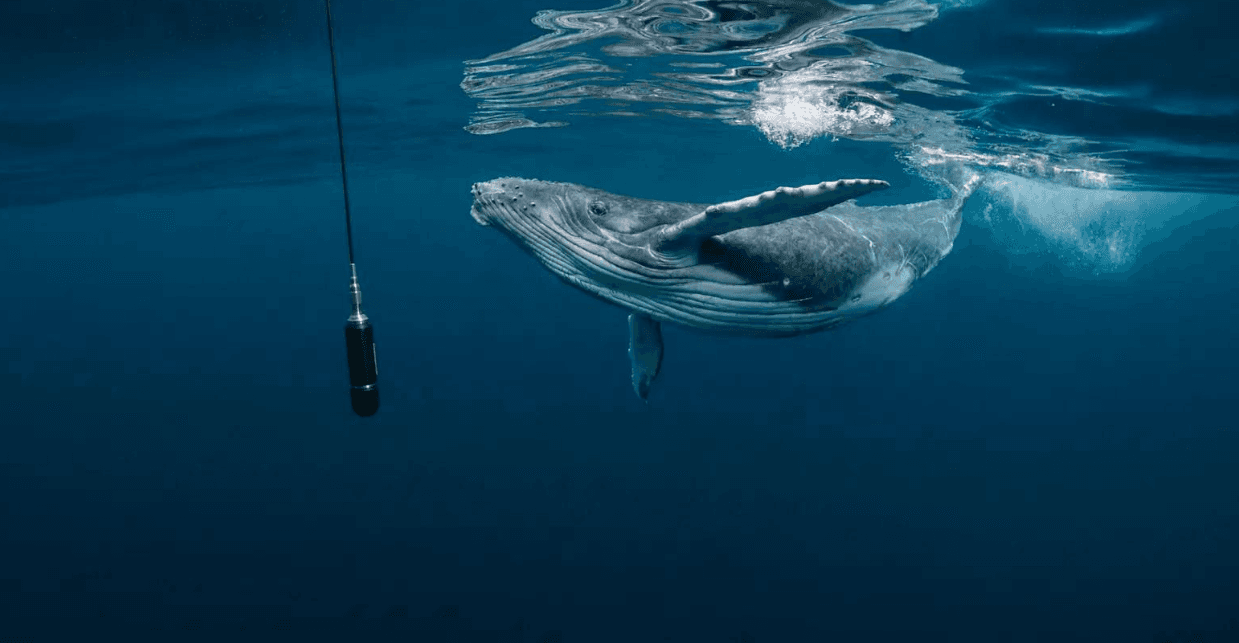
How Do Scientists Compare Humpback Whale Songs Recorded in Different Parts of the Caribbean?
Humpback whales produce complex songs that researchers can record and analyze to learn more about their communication. Comparing these songs across different locations can reveal whether whales share similar acoustic patterns, whether certain song features vary geographically, and how vocal behavior may be connected to the movements of whale populations.
Samaná Bay in the Dominican Republic is an important seasonal destination for humpback whale watching. It can also serve as a useful geographic reference when considering how researchers might compare recordings from different Caribbean locations.
However, comparing whale songs across regions requires more than listening to two recordings and deciding whether they sound alike. Scientists must account for differences in recording equipment, environmental conditions, sampling dates, and the whales represented in each dataset.
This guide explains how researchers compare humpback whale songs across the Caribbean and what these comparisons can—and cannot—tell us.
Why Compare Humpback Whale Songs Across Different Locations?
Geographic comparisons help researchers investigate whether whale songs contain shared patterns across locations or whether particular features vary among recording sites.
A comparison might examine recordings from Samaná Bay and other suitable Caribbean or nearby North Atlantic study areas. The choice of locations depends on the research question, the available recordings, and the seasonal movements of the whales being studied.
Scientists may investigate several questions:
- Do recordings from different locations contain similar song units?
- Are phrases arranged in comparable sequences?
- Do certain acoustic features occur more frequently in one dataset?
- Are similar song patterns detected during the same period?
- Can the observed similarities help generate hypotheses about connections between whale groups?
These questions are related but not identical. Similar song patterns do not necessarily prove that the same individuals visited both locations, while differences do not automatically demonstrate that the whales belong to separate populations.
Geographic comparisons are most informative when researchers combine acoustic evidence with appropriate biological and movement data.
1. Collecting Comparable Recordings From Different Regions
The first challenge is obtaining recordings that can be compared fairly.
Researchers may collect underwater audio using stationary hydrophones, recording systems deployed from vessels, or other suitable acoustic equipment. Each recording should be accompanied by information about the date, location, sensor depth, equipment, recording settings, and environmental conditions.
For example, a research team might compare recordings collected in Samaná Bay with recordings from another regional monitoring site. Ideally, both datasets would contain sufficient usable audio from comparable periods of the breeding season.
If one dataset contains mostly short recordings and another contains continuous monitoring, the difference in sampling effort could affect which song patterns are detected.
Researchers therefore document recording duration, missing data, and the criteria used to select usable recordings.
The goal is not necessarily to use identical equipment everywhere. Rather, scientists need to understand equipment differences and establish whether the resulting recordings can be compared reliably.
2. Identifying Common Song Units
Humpback whale songs contain repeated acoustic units that can be examined individually and as parts of larger sequences.
Scientists use audio analysis and spectrograms to identify these units. A spectrogram displays how the frequency content of a sound changes over time, helping analysts examine its contour, duration, and internal structure.
Researchers can assign labels to recurring sound categories and compare those categories across recordings from different locations.
For example, two regional datasets might contain a similar rising tonal sound. Analysts would examine its detailed acoustic characteristics and surrounding sequence before deciding whether the units are sufficiently similar to be treated as the same category.
Consistent classification rules are important. If analysts use different definitions in different regions, apparent geographic differences may reflect the classification process rather than the whales' vocalizations.
Ambiguous sounds should be reviewed carefully rather than automatically assigned to an existing category.
3. Comparing the Structure of Complete Songs
Individual sound units are only one part of the comparison. Scientists may also examine how units are arranged into phrases and longer sequences.
Two recordings can contain similar sounds but organize them differently. Conversely, recordings may contain some variation in individual units while retaining a broadly similar sequence.
Researchers can represent songs as ordered sequences of identified units and compare their structure. They may examine which phrases appear, how frequently they repeat, and whether the sequence of elements is similar.
This analysis can help distinguish between recordings that share only a few common sounds and recordings that have a more extensive structural resemblance.
Incomplete recordings create a particular problem. A song captured near its beginning may appear different from a recording that includes several later phrases.
Scientists should therefore consider recording length and completeness before drawing conclusions about geographic differences in song structure.
4. Measuring Acoustic Similarity
Researchers can compare song recordings using quantitative acoustic measurements rather than relying entirely on subjective listening.
Depending on the study, these measurements may include:
- Starting and ending frequencies.
- Frequency range and contour.
- Duration of individual units.
- Timing between units.
- Similarity of repeated phrases.
- Distribution of acoustic energy.
- Overall similarity between sequences.
Software can calculate acoustic features and help organize large collections of recordings. Statistical methods may then identify patterns of similarity within and between locations.
For example, an analysis could measure whether recordings from two sites contain similar categories of song units or whether one site has a different distribution of certain acoustic features.
The interpretation must remain tied to the method used. A high acoustic similarity score indicates resemblance under the selected measurement system; it does not, by itself, prove that the songs were produced by the same individual or group.
5. Accounting for Different Recording Equipment
One of the most important issues in regional comparisons is equipment consistency.
Hydrophones can differ in sensitivity and frequency response. Recording systems may also use different sample rates, gain settings, and signal-processing procedures.
These differences can affect the apparent characteristics of a sound. A weak frequency component might be clear in one recording but difficult to detect in another.
Researchers can address this issue by documenting equipment specifications, calibrating systems where appropriate, and applying compatible processing methods.
If the datasets use different recording formats, analysts may need to standardize certain aspects before comparing them. However, standardization should not remove genuine biological information.
Original recordings should be preserved so that important findings can be checked against the source material.
When equipment differences cannot be resolved confidently, the study should report that limitation rather than presenting every measured difference as biological.
6. Separating Geographic Differences From Background Noise
Different locations may have different acoustic environments.
One recording site might experience substantial vessel traffic, while another may have more wave noise or other biological sounds. These conditions can affect the clarity of the recordings and the number of song units that analysts can identify.
Background noise may obscure part of a song or make some frequencies more difficult to measure.
Researchers can reduce these problems by documenting noise conditions, using consistent quality criteria, and excluding or separately analyzing recordings that do not meet the study's requirements.
They should also distinguish between a genuine difference in song structure and a difference in the ability to detect that structure.
For example, if a particular unit is not detected at one location, that does not prove the whales there never produce it. The sound may be absent from the sample, masked by noise, or missed during classification.
Reliable regional comparisons must account for these possibilities.
7. Comparing Recordings From Similar Times of the Year
Humpback whale song patterns can change over time. This means that differences between two geographic datasets may reflect when the recordings were collected rather than where they were collected.
A comparison between recordings from different months may mix geographic variation with seasonal change.
Researchers can reduce this problem by selecting recordings from comparable stages of the breeding season, analyzing timing explicitly, or including date-related factors in their statistical models.
For example, a study might compare recordings from two locations collected during overlapping seasonal periods. If a difference remains after accounting for timing and sampling conditions, the researchers can investigate whether geography provides a plausible explanation.
Even then, additional evidence may be necessary to determine the biological significance of the difference.
Comparing several years and multiple seasonal periods can help researchers understand how stable the observed regional patterns are.
8. Investigating Shared Songs Between Whale Groups
Humpback whale songs have been studied as a form of socially influenced vocal behavior. In some populations, research has documented changes in song patterns spreading between groups.
Geographic comparisons can help scientists investigate whether similar song patterns occur in different places and whether the timing of those patterns is consistent with possible connections between groups.
However, shared songs do not necessarily establish direct contact between specific whales. Similarity could reflect broader cultural processes, shared population history, or other factors.
To investigate how a song pattern spreads, researchers need information about when it appeared, where it was detected, and how its structure changed over time. Movement data and observations of whale groups may provide additional context.
The distinction is important: acoustic resemblance can support a hypothesis about relationships between groups, but it does not independently confirm a specific migration route or social interaction.
9. Using Statistical Analysis to Compare Regions
When researchers have many recordings, statistical methods can help them evaluate whether regional differences are consistent and meaningful.
The appropriate approach depends on the type of data. Individual sound features, phrase sequences, and song-category frequencies may require different analytical methods.
Researchers should consider the number of recordings from each location, unequal sampling effort, repeated recordings from the same site, and differences in recording quality.
They should also avoid treating every sound unit as an independent observation when many units come from the same song or recording session.
Results should describe the size and uncertainty of observed differences. A statistically detectable difference is not automatically a biologically important one.
Likewise, failure to detect a difference does not prove that the songs are identical. Limited sample sizes or noisy recordings may reduce the ability to identify genuine variation.
10. Combining Acoustic Comparisons With Whale Movement Data
Acoustic similarity becomes more informative when it is considered alongside independent evidence about whale movements.
Researchers may use photo-identification, visual surveys, tagging studies, or other suitable methods to investigate whether whales move between areas. Each method has its own limitations, and not every study can identify the individual animals responsible for recorded songs.
If similar song patterns are detected at two sites, movement evidence could help researchers evaluate whether connections between the areas are plausible.
If the acoustic patterns differ, movement data may help determine whether the recordings represent different groups or whether other explanations are more likely.
Scientists should not infer a direct migration route from song similarity alone. Acoustic recordings identify vocal patterns, while movement studies address where animals travel.
Combining independent evidence provides a stronger basis for interpreting regional relationships.
11. What Comparisons Could Reveal About Samaná Bay
A well-designed study could compare humpback whale songs recorded in Samaná Bay with suitable recordings from other locations.
Researchers might examine which sound units are shared, whether phrase sequences show similarities, and whether acoustic patterns remain consistent across comparable sampling periods.
They could also investigate whether regional similarities change over successive seasons or whether certain patterns appear in some datasets but not others.
The conclusions would depend on the quality and representativeness of the recordings. A limited sample from Samaná Bay cannot necessarily describe every whale using the area, and recordings from another location may represent a different mixture of singers.
These are potential research questions, not claims that a particular cross-regional comparison has already been completed. Specific findings about Samaná Bay require verified recordings and documented scientific analysis.
12. Why Regional Song Comparisons Matter for Conservation
Studying whale songs across locations can contribute to a broader understanding of humpback whale communication and population ecology.
Long-term, comparable acoustic datasets may help researchers track recurring song patterns, identify questions about relationships between whale groups, and investigate how vocal behavior varies geographically.
Acoustic monitoring can also provide information when visual observations are difficult. Nevertheless, it cannot replace all other research methods.
Song similarity does not directly measure population size, and song differences alone do not establish population boundaries. Conservation decisions should use multiple lines of evidence, including appropriate biological observations and information about the animals' distribution.
For whale-watching destinations such as Samaná Bay, reliable research can help improve understanding of the whales that use the region while supporting careful, evidence-based communication about their behavior.
Conclusion
Scientists compare humpback whale songs across the Caribbean by collecting suitable recordings, identifying common sound units, analyzing phrase sequences, measuring acoustic similarity, and accounting for differences in equipment, timing, and background noise.
These comparisons can reveal shared patterns and geographic variation, but their interpretation requires care. Similar songs do not prove that the same whales visited multiple locations, and different recordings do not automatically indicate separate populations.
For Samaná Bay, cross-regional acoustic research offers a useful framework for investigating humpback whale communication. Reliable conclusions depend on comparable recordings, transparent methods, and supporting evidence that matches the specific research question.
Frequently Asked Questions
Can humpback whales in different Caribbean locations sing similar songs?
Similar song patterns may be found across different locations, depending on the populations and periods being compared. The extent of similarity must be established using suitable recordings and consistent analysis.
How do scientists compare whale songs from different regions?
They analyze sound units, phrase sequences, frequency contours, durations, and other acoustic features, while accounting for recording conditions and sampling differences.
Does a similar song prove that two whales belong to the same population?
No. Acoustic similarity alone cannot establish population identity. Researchers need additional biological, movement, or genetic evidence where appropriate.
Can whale songs reveal migration routes?
Song comparisons can help researchers develop hypotheses about connections between locations, but acoustic similarity alone cannot confirm a specific migration route. Independent movement data are needed.
Why must scientists compare recordings from similar times of the year?
Song patterns can vary over time. Comparing recordings from comparable seasonal periods helps reduce the risk of confusing temporal changes with geographic differences.
Has a specific difference between Samaná Bay whale songs and other Caribbean songs been confirmed?
A specific claim requires verified recordings and published or otherwise documented analysis. General knowledge about humpback whale communication is not sufficient to establish a local geographic difference.

Local explorer & expert guide in Salto El Zumbador.